
Free browser-based calculation tool
Free peptide calculator.
Enter vial strength, reconstitution liquid, and a verified target amount. The peptide calculator shows concentration, draw volume, and U-100 syringe units with the complete formula visible.
No signupFree on mobile and desktop
PrivateInputs stay in your browser
TransparentEvery conversion is shown
Live peptide calculator
Runs locallyCalculate peptide reconstitution and syringe units.
Calculated U-100 marking
5units
0.05 mL draw volume- Concentration
- 5 mg/mL
- Target volume
- 0.05 mL
- Vial math
- 40 calculated amounts
Transparent math
250 mcg ÷ 5,000 mcg/mL × 100 = 5 unitsPeptide calculator instructions
How the free peptide calculator works
The calculator follows the formula from mass to concentration, then from target mass to liquid volume and U-100 units. Keeping the steps in order makes the result easier to verify independently.
Enter peptide vial strength in mg
Use the total mass shown by the applicable label or verified documentation. Do not infer vial strength from container size, cap color, or another calculator.
Arithmetic example: 10 mg total vial massAdd reconstitution liquid volume in mL
Enter the liquid volume already established for the scenario. Dividing vial mass by this mL value produces the concentration used by later steps.
Arithmetic example: 2 mL entered liquid volumeEnter a target amount in mg or mcg
Select the exact mass unit and enter a target from an appropriate professional, product label, or authorized protocol. The site converts it but never chooses it.
Arithmetic example: 250 mcg, never a recommendationFocused peptide calculation tools
Choose a peptide calculator for each conversion
Use the general tool for the complete calculation or open a focused page for reconstitution concentration, dosage conversion, U-100 syringe units, mg-to-mcg conversion, or retatrutide-specific arithmetic.
Vial mg and liquid mL
Peptide reconstitution calculator
Calculate concentration, target volume, and U-100 markings from verified inputs.
Target mass to draw volumePeptide dosage calculator
Convert an existing mg or mcg target into mL and U-100 units.
mL to U-100 markingsSyringe units calculator
Check how a concentration-based draw volume maps to a U-100 scale.
Milligrams and microgramsmg to mcg converter
Convert mg to mcg or mcg to mg with the exact ×1,000 relationship.
Recommended peptide calculation guides
Explore peptide calculator tools by unit and input
Follow one conversion at a time with a focused calculator. Each guide keeps the formula, required inputs, output units, and calculation-only boundary visible.
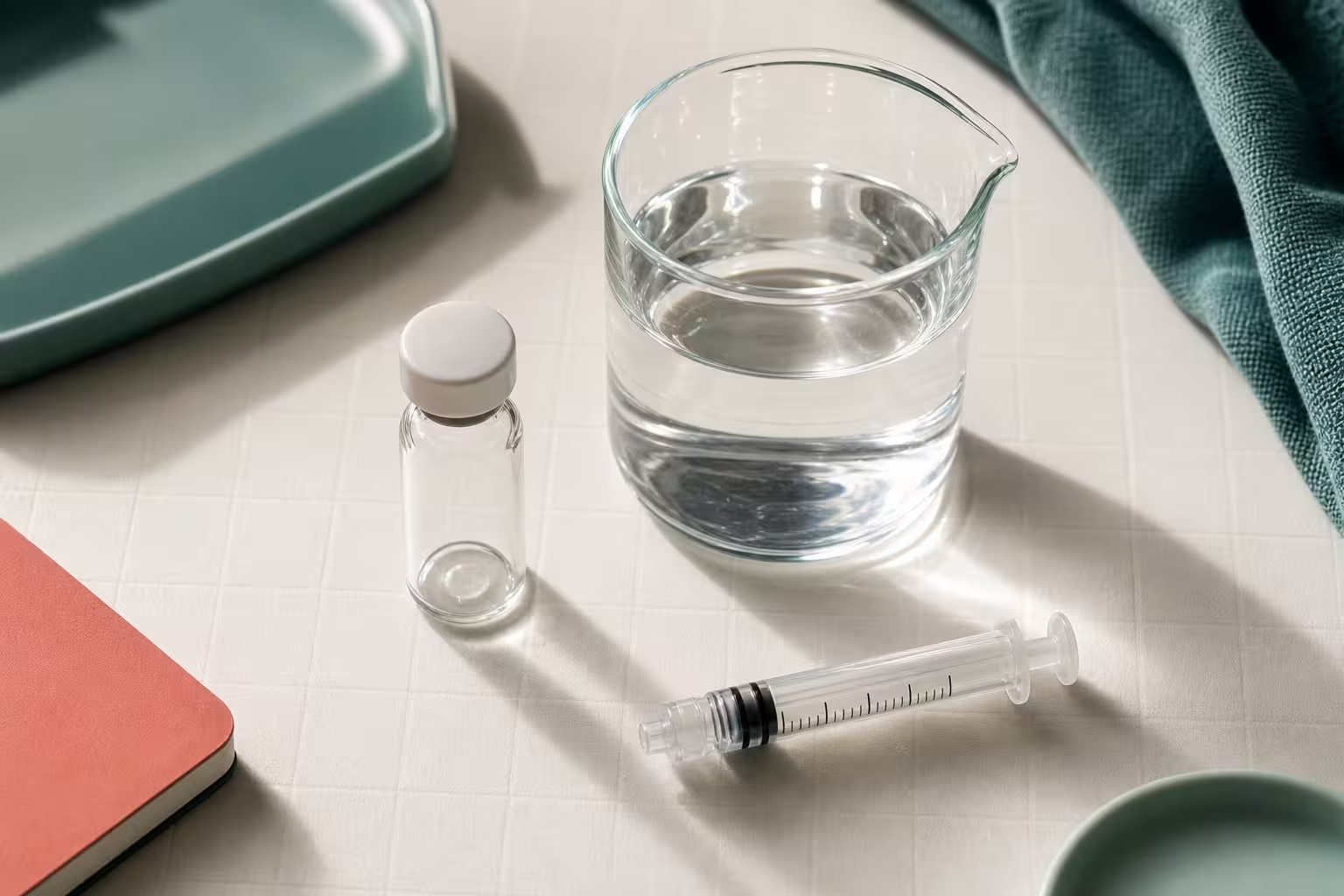
Vial mass and liquid volume
Peptide reconstitution calculator for vial mg and liquid mL
Use the vial mass and liquid volume already established for your scenario. The focused calculator shows concentration in mg/mL and mcg/mL before mapping an entered target to volume, without selecting either input.
Formula check
Open reconstitution calculatorconcentration (mg/mL) = vial mg / liquid mL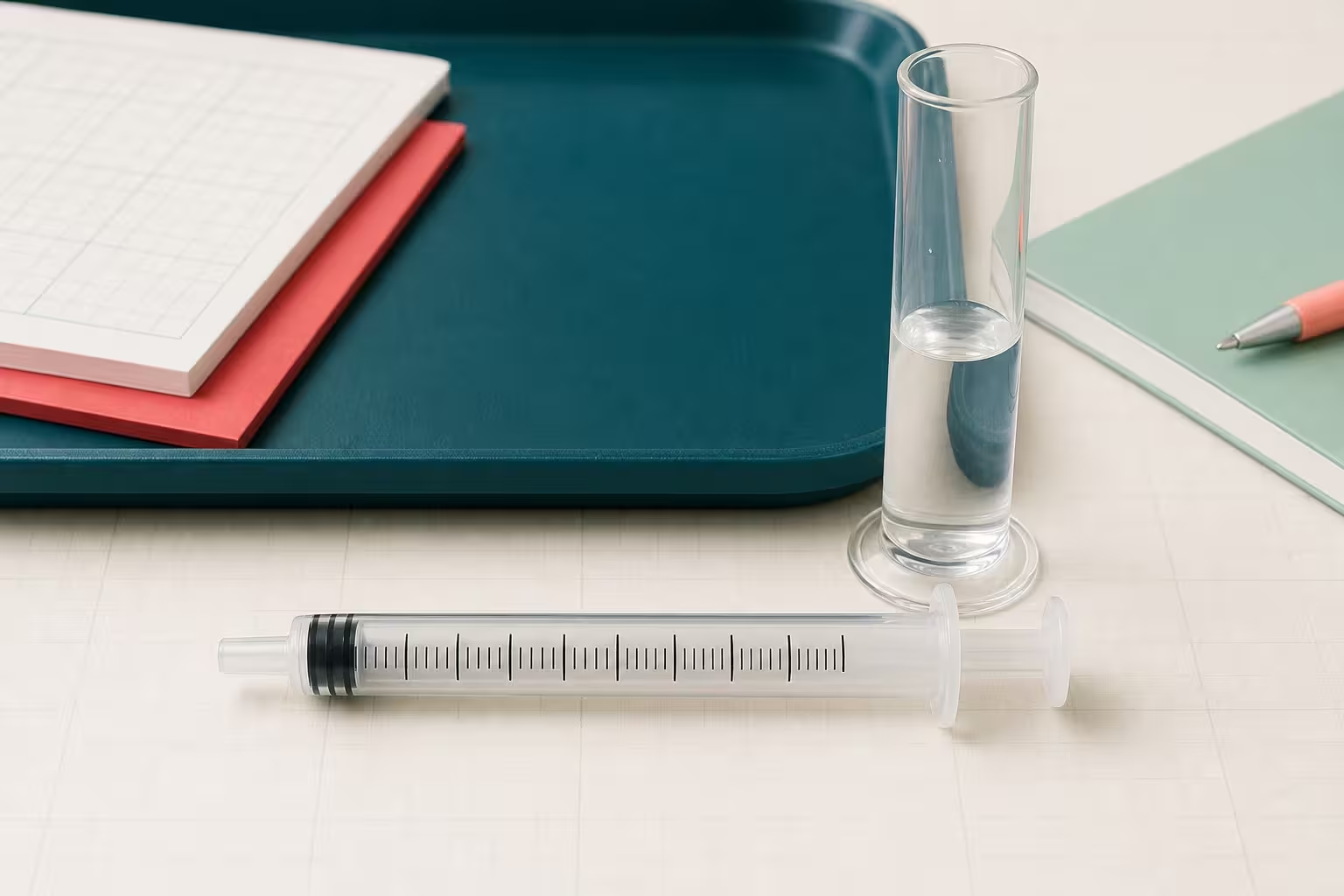
Draw volume and scale markings
Syringe units calculator for mL and U-100 markings
After a target volume is calculated, a confirmed U-100 scale represents 100 marked units per milliliter. Check mL and units together so the device marking stays connected to the underlying volume.
Formula check
Open syringe units calculatorU-100 units = draw volume (mL) x 100
Milligrams and micrograms
mg to mcg converter for peptide calculation checks
Normalize mass units before comparing a target with vial strength. Keeping the mg or mcg label visible beside every value makes a thousand-fold unit mismatch easier to identify and correct.
Formula check
Open mg to mcg converter1 mg = 1,000 mcgWhat a peptide reconstitution calculator calculates
A peptide calculator connects total vial mass, liquid volume, and a target mass supplied by the user. Vial mass divided by liquid volume produces concentration. Target mass divided by concentration produces draw volume. On a confirmed U-100 scale, draw volume multiplied by 100 expresses the same volume as marked units. None of these equations evaluates treatment or suitability.
In an arithmetic example, 10 mg entered with 2 mL produces 5 mg/mL or 5,000 mcg/mL. An entered target of 250 mcg corresponds to 0.05 mL, which maps to 5 units on U-100. These values let users reproduce the formula; they do not recommend a vial, liquid amount, target, product, or procedure.
How to convert mg to mcg for peptide calculations
NIST defines milli as 10^-3 and micro as 10^-6, making 1 mg exactly 1,000 mcg. The interface keeps a unit beside every mass and repeats the normalized target in the formula. This matters because a bare number cannot reveal whether a thousand-fold conversion was applied correctly. The separate mg to mcg converter is available for checking this step alone.
mg and mcg measure mass, mL measures volume, and U-100 units label a scale with 100 markings per milliliter. They are not alternative names for the same quantity. Concentration must connect mass with volume before a peptide target can be expressed as mL or a syringe marking.
How peptide calculator results map to U-100 units
The bold value is a calculated U-100 marking based only on the current inputs. Supporting results show concentration, mL, and a theoretical amount count. That count is total mass divided by target mass, not a schedule or usable-yield claim. Dead space, transfer loss, device tolerances, and material remaining in a vial sit outside the formula.
Peptide Calculator cannot verify vial identity, purity, sterility, storage, route, compatibility, prescription status, or product suitability. Bacteriostatic Water for Injection has separate official labeling and warnings, including product-specific concentration, dose, and route considerations that this website cannot choose.
How to check peptide dosage calculations
Compare vial mass, actual liquid volume, and target amount with their sources. Confirm mg or mcg, then identify the syringe scale from its labeling. Read concentration and mL before the final marking. If any source, unit, or device label is unclear, stop rather than using a plausible-looking calculator answer.
A transparent calculator is useful because it makes repetitive unit math easier to repeat and inspect. It cannot make clinical, product, or procedural decisions. Keep the output attached to its inputs and use authoritative guidance for every question that extends beyond arithmetic.
Peptide calculator answers
Free peptide calculator questions
Quick answers cover reconstitution concentration, target conversion, U-100 units, and browser-local inputs without offering a dose or product recommendation.
What does a free peptide calculator calculate?
It divides vial mass by liquid volume to find concentration, then converts a target amount you enter into draw volume and U-100 syringe units. It does not choose the target amount.
Does this peptide dosage calculator recommend an amount?
No. Peptide Calculator performs unit conversion only. A qualified healthcare professional, applicable product label, or authorized protocol must provide the target amount.
How does the peptide calculator convert mL to U-100 units?
After calculating mL, the tool multiplies that volume by 100 because a U-100 scale has 100 marked units per milliliter. It does not treat peptide mass as insulin units.
Are peptide calculator inputs stored or uploaded?
No. Current calculator values are processed in your browser and are not submitted to a Peptide Calculator application server or saved as a calculation history.
Primary formula references
Peptide calculator formulas and primary sources
These first-party sources support the SI prefixes, U-100 volume relationship, and injection-safety boundaries used to explain the calculator.
- NIST SI prefixes
Official definitions for milli and micro used in mass conversion.
- DailyMed U-100 label
Official labeling that identifies U-100 as 100 units per mL.
- CDC injection safety
First-party guidance on sterile, single-use needles and syringes.